

All Nothing Everywhere
Musings on the new year, and plans for this space


A new year has arrived. 2023 is here. As of June, I will have been back in Iowa for a decade, and have had my doctoral degree for as long. I’m 40 now, and there’s a Sagittarian optimism I can’t shake at times of new beginnings like new calendar years, new academic years, and birthdays. I like that we’ve built into our world moments to start fresh, start something new, mark a beginning, or a rededication, or whatever the case may be.
Housekeeping
One thing I’m rededicating myself to this year is this newsletter. I love writing it, and it seems to be a genre of writing that just clicks for me. Even while on hiatus, my subscriber count kept growing, and so in 2023, I commit to posting multiple times a week here, every week, with the occasional break.
I’m also going to open up paid subscriptions. It’s a good way to let readers support me, and if you don’t want to or can’t afford a paid subscription, you will only lose access to archives a year old, and my third post a week. Eventually, I would like to start a podcast, which would be available as a paid subscriber benefit, but that is farther down the line.
I’ve set the price at $5 a month or $50 if you pay annually.
Additionally, Substack makes it possible for you to choose to pay what they call a “founding” or “sustaining” member. You can choose the amount you pay, though I think the suggested amount is $100. As an incentive, if you elect to become a sustaining member, you will also receive a half hour poetry critique from me. If you’re not a poet, I can offer a critique on any other genre, and if you’re not a writer, but would still like to support me, we can work something else out.
I look forward to giving myself the gift of more time devoted to writing this year, and hopefully more discussion in the comments section. As always, I would love to hear what you would like to see in this space. Our overarching theme is “creativity,” but that is a very broad umbrella, and quite a lot can fit under there. I’m planning to do a weekly Friday post that will be a sort of “Weekly Wrap-Up” of interesting things I read/watched/listened to that week, and those posts will always be free. People are always asking me for book recommendations, and this is one way to honor that.
Now, with that business out of the way, on to my thoughts for the new year.
In honor of the new year, here is a poem by John Clare, one of my favorite male romantic poets.
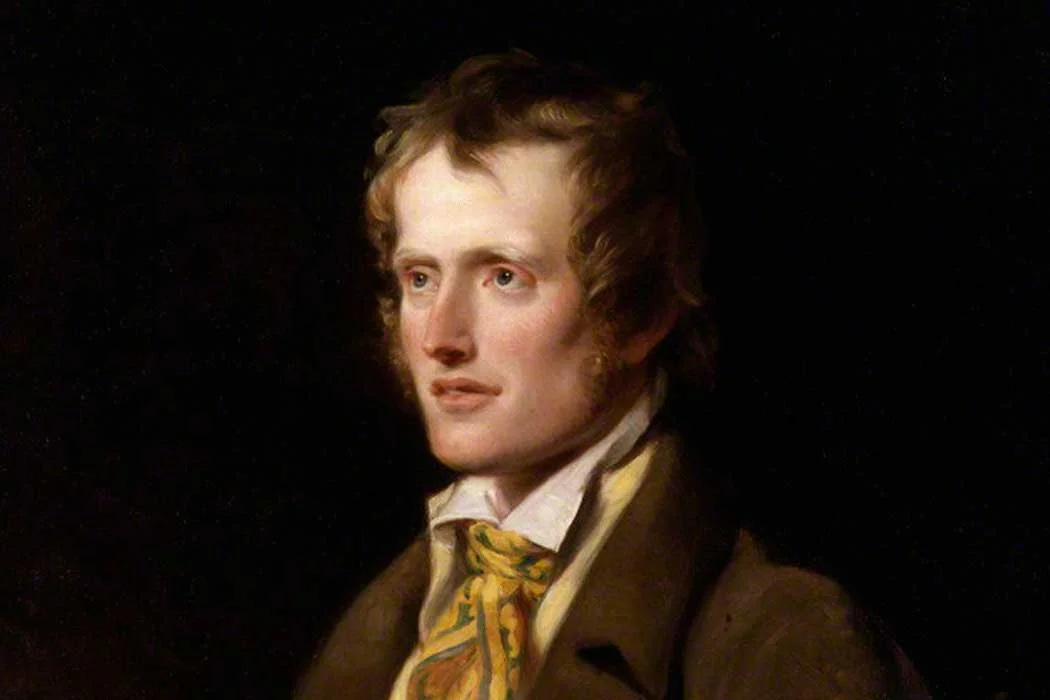
The Old Year
John Clare - 1793-1864

The Old Year's gone away
     To nothingness and night:
We cannot find him all the day
     Nor hear him in the night:
He left no footstep, mark or place
     In either shade or sun:
The last year he'd a neighbour's face,
     In this he's known by none.

All nothing everywhere:
     Mists we on mornings see
Have more of substance when they're here
     And more of form than he.
He was a friend by every fire,
     In every cot and hall--
A guest to every heart's desire,
     And now he's nought at all.

Old papers thrown away,
     Old garments cast aside,
The talk of yesterday,
     Are things identified;
But time once torn away
     No voices can recall:
The eve of New Year's Day
     Left the Old Year lost to all.
Clare was distinct from other writers of his time because he was not a landed gentleman, but a farmer and laborer who stridently opposed enclosure,1 and was institutionalized at the age of 44, where he lived until his death at 71.
His biographer Johnathan Bate (whose biography is stunning and should be read if you’re interested in Clare’s work) called Clare "the greatest labouring-class poet that England has ever produced. No one has ever written more powerfully of nature, of a rural childhood, and of the alienated and unstable self."2 During his lifetime, he was known as the "Northamptonshire peasant poet," quite a distinction from, for example, Lord Byron.
I could nerd out about Clare all damn day, as he was a major focus of my studies during my MFA. But for now, I’ll just say how much I love the personification of the Old Year in this poem above. There is something comforting in thinking about how a bad old year might simply disappear once the new year is born.
I am wishing you a very happy 2023, and whether you choose to be a paid subscriber or not, thank you for being here!
Enclosure was the practice of landowners enclosing their property, including the “common land” supposedly for greater agricultural efficiency, and by doing so depriving commoners of their rights of access and privilege. Prior to enclosure, tenants and peasant-laborers would have small strips of land they could use for subsistence farming. Enclosure removed this available land, and it was not simply the fencing of existing land holdings on the part of the “lord of the manor;” there was also a fundamental change in agricultural practice. One Anonymous poet wrote this at the time, in protest of Enclosure:
“The law locks up the man or woman
Who steals the goose from off the common,
But lets the greater felon loose
Who steals the common from the goose."
Bate, Jonathan (2003). John Clare: A biography. New York City: Farrar, Straus and Giroux. ISBN 978-0374179908.